The Peoria incident raises an important question: Would your organization's crisis plan actually work?
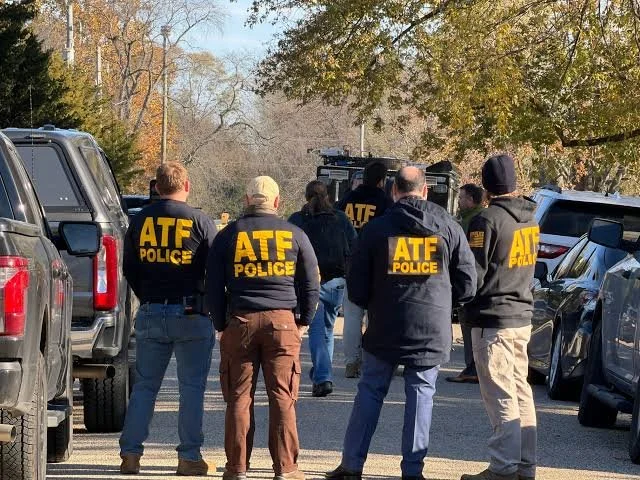
Friday the 13th has a reputation, and this year in Peoria, Illinois, it earned it. On the afternoon of November 13, 2026, workers at an ethanol production facility reported a bomb threat to police. About an hour later, responders found a suspicious package near the plant, and it turned out to be the real thing. Thankfully, bomb technicians rendered it safe several hours later, but by then the response had grown well beyond the fence line: a one-mile evacuation zone, more than 5,000 residents and workers displaced, traffic on the Illinois River shut down, and roughly 24 hours before people were allowed to go home.
Fortunately, nobody was hurt, and everyone involved in the response deserves credit for that. That said, when I first heard about the incident, my mind went where it usually goes. Who took that threat, and what made them treat it as real instead of writing it off as a prank? What happened in the first ten minutes after they reported it? How did that chain of decisions end with thousands of people out of their homes overnight?
Those are the questions I ask because finding the threat is only part of the problem. I want to know how the organization handled it and whether they were prepared for everything that followed.
The Risk Doesn't Stop at the Fence Line
Critical infrastructure isn't necessarily harder to secure just because somebody put the word "critical" in front of it. The difference is the potential impact when something goes wrong. A disruption at a power plant, dam or chemical facility can affect thousands of people who have nothing to do with the operation itself. That's what makes these facilities so important to protect. You're not just considering the risk to the business, but the consequences for the surrounding community as well.
One vulnerability that doesn't get nearly enough attention is aging infrastructure. You've heard the saying, "If it ain't broke, don't fix it," and I get it. When a system has run reliably for years, executives have every right to ask why they should spend the money and absorb the disruption to replace it. The problem is that aging systems can develop vulnerabilities long before they show any signs of failing. Plenty of things "ain't broke" right up until 2 a.m. on a holiday weekend.
An outdated system can hum along just fine under normal conditions while quietly becoming more vulnerable to disruption, and to be fair to the skeptics, upgrading it carries risks of its own. The real question isn't whether to invest. It's understanding what it costs to keep the status quo versus what it costs to change, including the disruption that comes with either choice.
The Crisis After the Crisis
The moment an incident requires evacuating the neighborhood, the job changes. You're no longer managing just your own people, your own building or your own operation. Once an incident reaches beyond your property, you're dealing with a much larger response involving local law enforcement, emergency management, neighboring businesses and the surrounding community. Police officers are being pulled away from their regular duties, residents may be forced to leave their homes, and businesses that have nothing to do with the incident can find themselves shut down. All of that has to be considered when decisions are being made.
Like it or not, you're going to be on the news. That adds a whole new level of scrutiny to decisions you're already making under pressure. Your reputation, your relationship with the community and how well you handle the response are suddenly playing out in public, in real time. Let me be clear: none of that should ever outrank protecting human life. Those are real consequences, however, and leadership needs to understand them before they show up, not after.
One of the hardest parts of crisis management is making decisions with incomplete information, because you will never have all of it. Sometimes the worst decision is no decision at all. Other times, a rushed decision creates problems you can't easily undo.
Take an evacuation. "Get everybody out" is easy to say, and then come the questions. Where are they going? How long will they be gone? If it stretches overnight, and in Peoria it did, is there food, water, restrooms and somewhere to sleep? What about people who don't have transportation, or families with pets that aren't allowed at the shelter? Those questions become part of your response whether anybody planned for them or not.
The same goes for shutting down operations. A facility isn't a light switch. You don't flip it off on Friday, flip it back on Saturday and pick up where you left off, because shift schedules, equipment, transportation, customers and suppliers all feel it. The incident itself may be over in hours while the operational hangover lasts days or weeks. That's why crisis management has to cover more than the emergency in front of you. It has to account for the ripple effects of your own response.
A Plan on Paper Isn't a Capability

Most organizations have an emergency response plan and a business continuity plan, but can they actually execute them? One of the most common problems I run into is a plan that exists only as a document. It was written years ago, might get a quick review every so often, and goes back on the shelf until the day somebody needs it. A plan like that is a paperweight with a table of contents.
A lot can change in ten years. The people responsible for executing the plan may be gone, the technology may be completely different, and nobody has stopped to ask whether the original plan would still work.
There's also a less obvious problem: the org chart. In large companies, the departments responsible for executing a continuity plan often report up through completely different leaders. Security, operations, IT, HR and others may all have critical roles in the same plan without sharing the same priorities. To one department, business continuity is mission critical. To another, it's something to get to "when things slow down." (Spoiler alert: Things never slow down.)
No amount of documentation fixes that on its own. A plan can name every stakeholder and assign every task, but if those people haven't coordinated, tested their assumptions or agreed on who makes which calls, the organization will find the gaps at the worst possible moment. That's where tabletop exercises earn their keep.
Picture a logistics operation that loses power. Most of what happens in that facility depends on technology, so when the power goes out, the operation can come to a standstill. You might have a business continuity plan that says you'll switch to manual processes, but has anyone actually figured out what that looks like? How are you going to keep the boxes moving when your systems are down?
Until the right people sit in the same room and walk through a realistic scenario, they don't really know where the holes are. The point of an exercise isn't to prove everyone knows what they're doing. It's to find out what needs to change before a real incident finds it for you.
Risk Is an Equation, Not a Guess
In a previous edition of The Risk Readout, I compared security investments to insurance. In both cases, you're spending money to protect against something you hope never happens. Determining how much to invest requires understanding how likely an incident is, what the consequences could be, and how much that investment would actually reduce the risk.
Calling something "low probability, high impact" doesn't tell anybody much. Does low probability mean 1 percent or 10 percent? Does high impact mean disrupting 5,000 people, roughly what Peoria went through, or potentially a million? Once you understand the probability and the consequences, you can weigh your options for reducing them. If a modest investment drops the probability of an incident from 10 percent to 1 percent, that's a strong business case. If dropping it from 10 percent to 9 percent costs tens of millions of dollars, good luck getting that one past the CFO. It's a calculation every security leader needs to be able to make.
The question isn't whether a security improvement is possible, because with enough money almost anything is possible. The question is whether the reduction in risk justifies the time, resources and investment. That's the conversation security leaders need to be ready to have with the executive team, in the executive team's language.
Don't Overlook the Human Element
For all the technology, infrastructure and strategy that go into protecting critical facilities, one of the most important lessons from Peoria is remarkably simple: somebody took it seriously.
Most bomb threats turn out to be hoaxes, and the people who receive them know it. It would have been easy to roll their eyes, assume it was a prank and get back to work. That's not what happened. The workers reported the threat to police and set the response in motion, and about an hour later, responders found a real device.
We don't know every detail yet. The investigation is ongoing and a person of interest is reportedly in custody, so it would be premature, and frankly unfair, to speculate about what security measures may or may not have failed. But the value of people who know what to do when something doesn't feel right is hard to overstate. We talk a lot about cameras, access control, perimeter protection and sophisticated detection technology, and all of that has its place. The same is true of an employee who hears something, sees something or just gets a bad feeling, and knows exactly what to do next.
That doesn't happen by accident. "See something, say something" programs aren't free. They take training, communication, clear reporting procedures and constant reinforcement. People need to know that a report will be taken seriously, and that nobody will make them feel foolish if it turns out to be nothing. Still, compared with major capital projects, human awareness is about as close to free risk mitigation as you're going to get. On the right day, it's the difference between a bad Friday and a catastrophe.
What Should Security Leaders Take Away?
Peoria is a good opportunity to take a hard look at your own preparedness, without making assumptions about what happened at that particular facility. Start with the basics. Is there an overlooked vulnerability someone could exploit? Would your employees recognize a threat, including one that comes in by phone, and know exactly how to escalate it? Do you know your local police and fire chiefs by first name, before you need them?
Then look past prevention. If an incident forced you to evacuate or shut down operations, would the people making those calls understand the consequences? Does your continuity plan reflect how your organization actually operates today, not how it operated when the plan was written? Have the people expected to execute it ever worked through a realistic scenario together?
None of these are groundbreaking questions, and that's not the point. I recently told my own team that sometimes the value of professional development isn't learning something brand new. Sometimes it's confirming that you're already doing the right things, asking the right questions and approaching problems the right way. There's real value in that kind of reinforcement, and the same goes for security preparedness.
Neutralizing a threat doesn't mean the crisis is over. What happens next depends on whether your organization is actually prepared or just has a plan on paper that says it is.
A crisis is a terrible time to find out your plan doesn't work.